
Portal Leads vs Your Own Website: Cost per Site Visit (2026)
Compare a 99acres, Magicbricks, or Housing.com lead with a lead on your own site by site visits that happened, not by the invoice.
Portal listing or your own page
You already pay 99acres, Magicbricks, or Housing.com. The renewal is the decision. The invoice is not the answer.
A portal enquiry and an enquiry on your own site are different products. One may be sold to other advertisers. The other comes only to you. If you stop paying, one relationship ends and the other page stays up.
This comparison covers three things: who else receives the enquiry, who keeps the buyer if you stop paying, and what you paid for one site visit that happened. It does not publish a cost-per-lead table. Fill the sheet from your own invoice and your own visit log.
TL;DR: Neither channel wins from the invoice. The portal wins this month when your page has no visits of its own. Your page wins the relationship, because you keep the buyer if you stop paying. Keep both for 60 days, count site visits that happened, and move budget only after that sheet is full.
Key Takeaways
- The useful number is spend divided by site visits that happened, not the enquiry count on the invoice.
- Read the plan. Many portal plans sell the same enquiry to more than one advertiser. Some sell it to you alone.
- Your page has to answer price, configuration, and location, or the portal wins for a bad reason.
- Do not cancel the portal from an article. Move money after 60 days of visits, or after a written zero.
Quick comparison
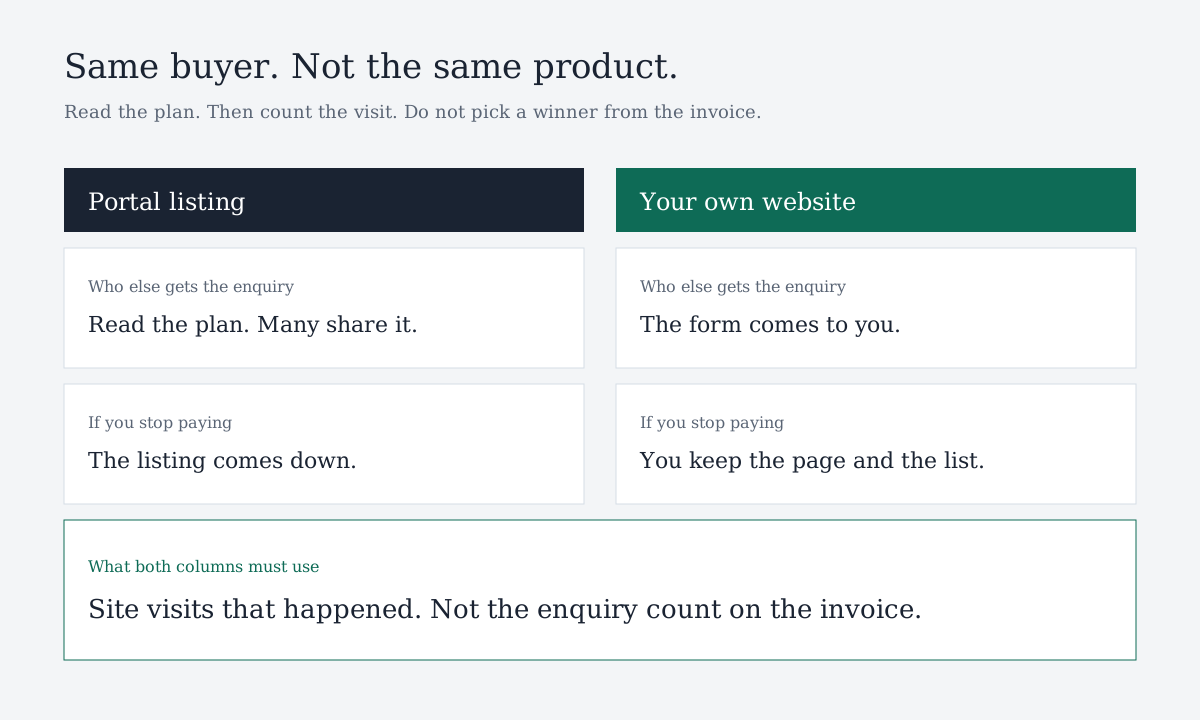
Use this table to see what each channel sells. A blank cost is not a loss. The cost stays undecided until your sheet has visits that happened.
| Category | Portal listing | Your own website |
|---|---|---|
| Best for | Being found this month, while the page has no traffic of its own | Keeping the buyer, the page, and the follow-up after you stop paying |
| Who else gets the enquiry | Read the plan. Many plans share it. Some sell it to you alone. | The form comes to you |
| If you stop paying | The listing comes down. The portal keeps the counter. | You keep the page and the list |
| What the invoice shows | The plan you bought, and sometimes a fee per enquiry | Ad spend you can tie to the project, plus the cost of running the page |
| What to count | Site visits that happened | Site visits that happened |
| How soon a buyer can find you | The listing can be live when the plan is active | A new page has no history. It needs a source of visits. |
| Verdict on cost | No winner until the 60-day sheet is full | No winner until the 60-day sheet is full |
Facebook ads and Google ads are ways to send visits to the page. They are a different comparison. A cheap click that never becomes a site visit fails in the same way as a portal enquiry that never becomes a site visit.
Who else receives the enquiry?
Your own website wins on exclusivity, unless the plan you signed already says the enquiry is yours alone.
Many portal plans sell the same buyer enquiry to more than one advertiser. Some plans do the opposite and sell that enquiry only to you. Both products exist. A share count copied from another developer's plan is not your plan. Read the document you signed.
If other advertisers can call the same buyer, you did not buy the same thing as a form on your site. If the plan says exclusive, you bought a closer product, and the sheet can compare them. On your site, the form comes only to you.
Exclusive does not mean better. An exclusive enquiry that never visits the site is still money spent. A shared enquiry that visits and books can be the better purchase. Exclusivity tells you what you bought. The visit tells you what it was worth.
For the same 60 days, ask the desk to note whether the buyer said another advertiser had already called. That tally is yours. Do not borrow one.
Who keeps the buyer if you stop paying?
Your own website wins, because the page and the list stay with you.
Stop the portal plan and the listing comes down. The buyer who came through that listing met you on the portal's counter. The next advertiser who pays can meet the next buyer there. You may have a phone number in your CRM if someone saved it. You do not keep the counter.
Stop the ads on your own page and the page remains. The buyer who already enquired is on your list. The next person who finds the page still meets you. A website with no visits is still not a win. You rent the portal introduction. You do not own the next one.
Export the portal enquiries the plan allows you to export, on the schedule the plan allows. If the plan does not let you take the list, write that on the sheet. It belongs in this row, where the renewal decision can see it.
Which channel can put you in front of a buyer this month?
The portal wins when your page has no visits of its own.
A listing can be live when the plan is active. A new project page has no search history, so someone still has to send the visit.
That is the case for keeping the portal while you build the page. If the page already receives visits, the portal's head start is smaller. The question then moves to cost per visit, not to whether you will be invisible without a listing.
Start the 60 days at least 60 days before the renewal. A sheet you open the week the invoice is due will not be full, and you will renew on memory.
What did you pay for one site visit that happened?
Neither channel wins until you divide spend by visits that happened.
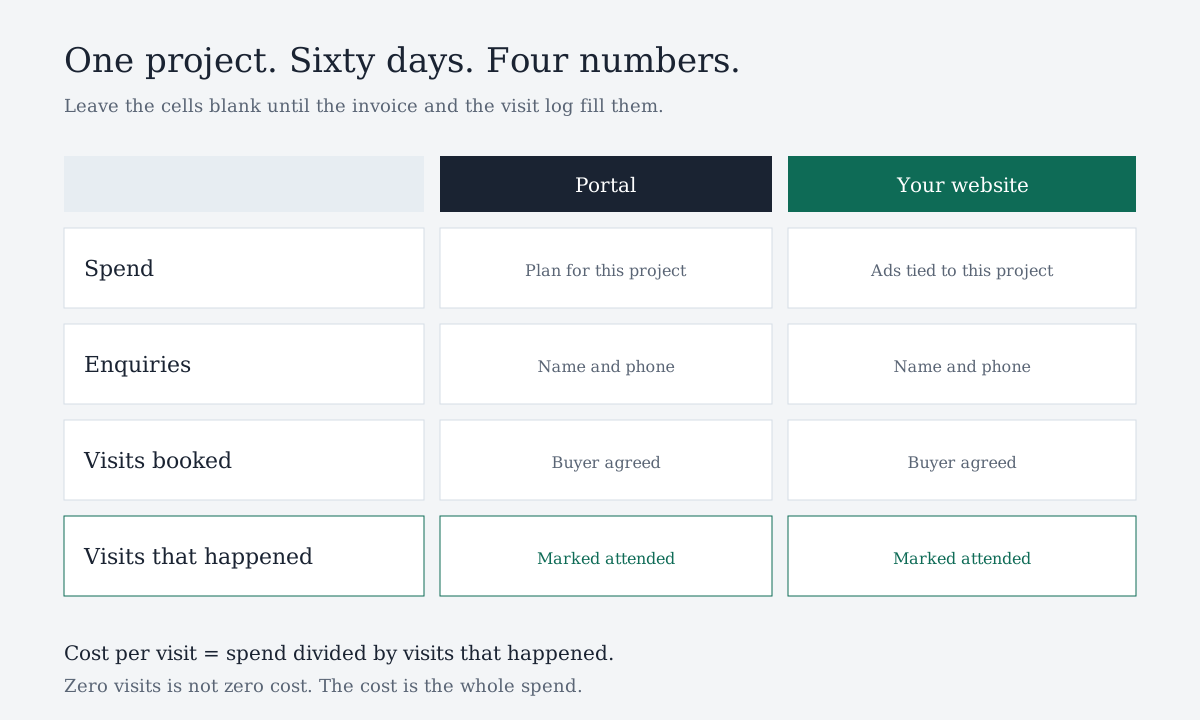
Pick one project. Pick 60 days. Use one sheet. Four numbers for each channel:
- Spend
- Enquiries
- Visits booked
- Visits that happened
Portal spend is the amount charged to that project in those 60 days. If the plan covers several projects, split it by each project's share of enquiries, and write the split on the sheet so you can defend it later. Website spend is the ad spend you can tie to that project in the same 60 days, plus the cost of running the page if you can tie it to the project. Leave out brand campaigns you cannot tie to it. Write the exclusion on the sheet.
An enquiry is a name and a phone number. A click is not an enquiry. An impression is not an enquiry.
A booked visit is an appointment the buyer agreed to. A visit that happened is one your team marked as attended. A no-show stays in booked. It stays out of happened.
Each visit row needs five fields: buyer name, project, channel, date booked, and whether someone marked it attended. If the visit was for a different project, it does not go on this sheet. If a channel partner brought the buyer, give that source its own column or leave it off. Do not drop broker visits into the website column to make the page look cheaper.
Cost per enquiry is spend divided by enquiries. Cost per site visit is spend divided by visits that happened. If visits that happened is zero, do not write zero as the cost. The cost is the whole spend, and the channel produced no visit.
Do not judge either column in week one. A portal can look cheap on enquiries early and expensive on visits by day 60. The reverse happens on a page that had no history.
If you already watch cost per lead, keep it. It answers a different question. How to reduce cost per lead is about leaks in a funnel you already pay for. It does not tell you whether the portal or the page produced the visit. Use the cheaper enquiry as a clue. Use the visit as the decision.
Does your page deserve the comparison?
The portal wins, for a bad reason, when your page will not answer price, configuration, and location.
A listing is a finished counter. The buyer can see a configuration, photos, a way to enquire, and usually a price band. Your page is the better counter only if it answers price, configuration, and location without sending the buyer back to the portal.
If the page says "price on request," the buyer did not prefer the portal. The page refused to answer. Fix that before you move budget. The practical checks are in why a real estate website gets traffic and no leads. What the page is allowed to say about price, carpet area, and possession is a separate question, covered in what a project website can say about price, carpet area, and possession. If the page cannot state the number, do not let a chat invent one.
The page also has to answer when the desk is closed. A form that sits until morning is a slower version of the portal callback. WhatsApp or a chat on the site can take the name and phone number then. Pick the one your team will actually read. Then run the same follow-up on portal enquiries and site enquiries. A channel looks expensive when nobody asked for the visit.
When should you move the budget?
Move budget only after the sheet is full. Until then, keep both.
Do not cancel 99acres, Magicbricks, or Housing.com because the page feels cheaper on numbers you remember. Keep both channels for the 60 days. Move money only when both columns have visits that happened, or when one column is a written zero.
If the portal's cost per visit is lower, keep paying it and fix the page. If the page's cost per visit is lower, and those enquiries came only to you, shift the next month toward the page. If both costs are high, the problem is the visit, not the channel. Look at the gap between visits booked and visits that happened before you buy more enquiries.
A zero on the website is not a verdict against owning the page. It means nothing sent buyers there, or the page did not answer. A zero on the portal, after a paid plan, is a reason to read the listing and the plan before you renew.
Choose the portal when
Choose the portal when you need to be found this month and the page has no traffic of its own. Choose an exclusive plan when buyers tell your desk that other advertisers already called, and you are willing to pay so the enquiry is not shared. You will only know that from the 60-day tally. Do not guess how many people share a lead.
Choose your own website when
Choose the page when it already answers price, configuration, and location, and you can send visits to it. Choose it when stopping the portal would throw away a list you are not allowed to export. Choose it for the buyer who comes back next quarter. The portal introduction ends when the plan ends. The page does not.
The decision
Keep the portal. Build the page until it can answer price, configuration, and location. Count site visits that happened for 60 days on one sheet. Move money only after that sheet is full.
When you want that sheet set up against a live project page, book a 15-minute demo.
Frequently asked questions
Are portal leads always shared with other advertisers?
No. Many plans sell the same enquiry to more than one advertiser. Some plans sell it to you alone. The plan you signed is the source. Do not use a share count from an article.
Should we cancel 99acres, Magicbricks, or Housing.com?
Not from this article. Keep the plan for 60 days, count site visits that happened, and move budget only after both columns are filled or one is a written zero.
What if our website has no traffic yet?
Then the portal is doing a job the page cannot do yet. Give the page a source of visits, and make it answer price, configuration, and location, before you treat a zero as a verdict against the page.
Which number should replace cost per enquiry?
Cost per site visit that happened. Divide the 60-day spend by the visits your team marked as attended. Keep cost per enquiry on the sheet if you already use it. Do not let it pick the channel.
Related Articles
Ready to Convert More Leads?
See how opZynic can transform your real estate website into a 24/7 sales machine.
Start Free Trial